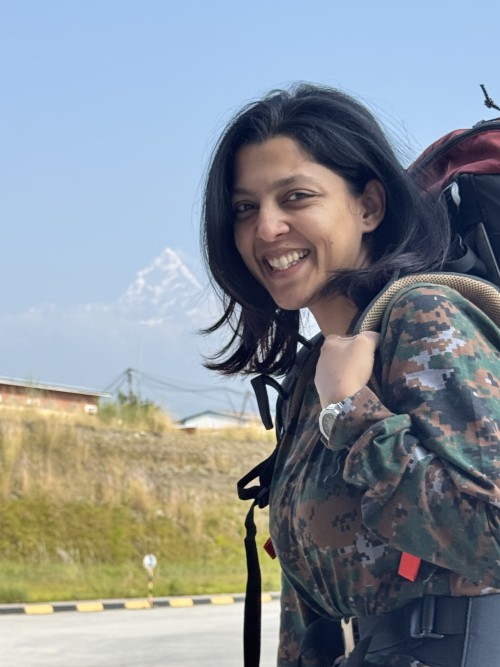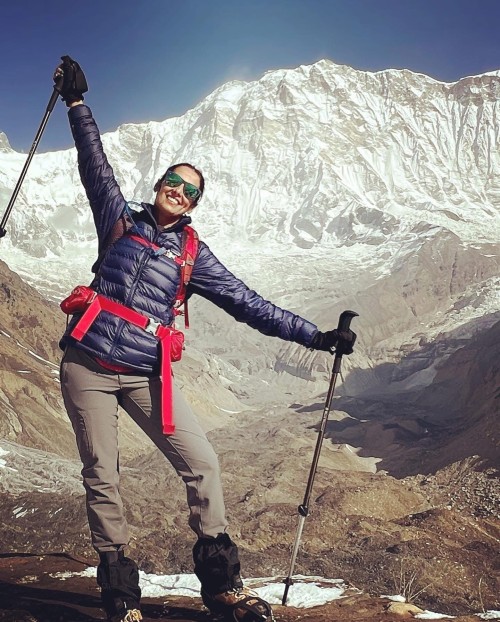


Offering amazing mountain views in a less time, the Annapurna Base Camp (ABC) Direct Trek is an exciting and quick way into the heart of the Annapurna Sanctuary. While still capturing the spirit of the Himalayas, this path is straight, avoiding lower-altitude towns and pointless detours.
The path rises through bamboo forests and rich rhododendron, crosses fast-moving glacial rivers, and progressively finds its way into the difficult alpine terrain. Trekkers see a variety of settings along the way, from dramatic, snow-covered peaks to deep green valleys. Annapurna Base Camp (4,130m) ends in a breathtaking amphitheater surrounded by towering giants including Annapurna I (8,091m), Machapuchare (6,993m), and Hiunchuli (6,451m).
Those looking for a demanding yet worthwhile adventure in a limited period of time will find this walk perfect. The Annapurna Base Camp Direct Trek offers an amazing Himalayan experience with stunning sunrise views, calm high-altitude surroundings, and rich cultural appeal of the Gurung people.
Highlights of the trip include shorter time reaching Annapurna Base Camp (4,130 meters). Over Annapurna, Machapuchare, and Hiunchuli, see amazing sunrise views. Discover the grand Annapurna Sanctuary surrounded by mountains. Discover varied scenery, from alpine terrain to rich rhododendron forests. Discover Gurung culture in little Himalayan towns.
.jpg)
For those seeking a quick yet thrilling adventure in the Annapurna Himalayas, this trek is ideal!
Day 1: Arrived Kathmandu and transfer to hotel, 1350 m.
Day 2: Reaching Pokhara, 830 m.
Day 3: Drive from Pokhara to Jhinu Danda & Trek to Sinuwa, 2360 m.
Day 4: Trek from Sinuwa to Deurali, 3200 m.
Day 5: Trek from Deurali to Annapurna Base Camp (ABC), 4130 m.
Day 6: Explore Sunrise view at ABC & Descend to Sinuwa, 2360 m.
Day 7: Trek to Jhinu Danda & Drive Back to Pokhara, 830 m.
Day 8: Back to Kathmandu, 1350 m.
Day 9: Finish trek with Jolly Himalaya
After arriving at TIA Airport Kathmandu, you must take an arrival visa from the immigration of Nepal for your stay in Nepal. However (15,30,90days), if you want to spend time in Nepal, you must pay ($30 for 15 days, 50 for 30 days). We also want to inform you that you may take up to 3 hours to complete all the procedures. It may vary according to the schedule of the plane and flight that you are coming from.
After that, we will stand at the arrival point with our banner and nameplate and take you to your hotel in the vehicle we have arranged. In this order, you will be welcomed with flowers and Khada (Special Buddhist prayer things). With all that, on the way to the hotel, you will find Nepali traffic jams, which can irritate you, but still, you will explore a little bit of the capital city of Nepal.
Reaching Pokhara is the first step to starting the Mardi Himal Trek. Here are the common ways to get to Pokhara:
1. By Flight (Most Convenient)
From Kathmandu: Domestic flights operate daily between Tribhuvan International Airport (Kathmandu) and Pokhara Airport.
Duration: 25–30 minutes. Cost: Approximately USD 100–150 (one way). Advantages: Saves time and offers spectacular aerial views of the Himalayas. Tip: Book flights in advance during peak trekking seasons (spring and autumn).
2. By Tourist Bus (Budget-Friendly)
From Kathmandu: Daily tourist buses leave early morning (6:30–7:30 AM) from Sorhakhutte or Kantipath.
Duration: 6–8 hours, depending on road conditions. Cost: USD 10–30. Advantages: Affordable and offers a scenic drive through hills, rivers, and villages. Tip: Opt for a luxury tourist bus for added comfort.
3. By Private Vehicle (Flexible but Expensive)
From Kathmandu: You can hire a private car, jeep, or van.
Duration: 5–6 hours. Cost: USD 120–200 (one way), depending on the vehicle size. Advantages: Flexibility in departure time and stops along the way.
4. By Local Bus or Microbus (Cheapest Option)
From Kathmandu: Local buses depart from Gongabu Bus Park.
Duration: 8–10 hours (often longer due to frequent stops). Cost: USD 5–10. Advantages: Very affordable. Disadvantages: Less comfortable and crowded
The trekking begins with a 2-hour scenic drive from Pokhara to Jhinu Danda (1,780m). The trek itself starts with a steep but scenic climb on terraced fields and dense forests to Chhomrong (2,170m), a traditional Gurung village with stunning views of Annapurna South and Machapuchare. After a short drop down stone stairs, trekkers cross the Modi Khola River and climb up to Sinuwa (2,360m), a quiet overnight resting place surrounded by dense forests and mountain views.
The second day's trek takes trekkers through a mystical bamboo and rhododendron forest, passing through the villages of Bamboo (2,310m) and Dovan (2,600m). The Modi Khola gorge is traced by the trail, with small waterfalls and serene natural beauty along the way. The vegetation changes as the altitude increases, and the air is cool and fresh. The land gets more rugged beyond Himalaya (2,920m), with rocky cliffs and glacier streams. The day's trek ends at Deurali (3,200m), and the trekkers can rest before the exertion towards Annapurna Base Camp the next day.
This is the toughest and most thrilling day of the trek, with the trail climbing up to Machapuchare Base Camp (3,700m). The forest becomes sparse and the landscape more alpine, with great views of Machapuchare, Annapurna III, and Gangapurna. From MBC, the final stretch to Annapurna Base Camp (4,130m) is an enchanting experience, as trekkers arrive at the Annapurna Sanctuary, surrounded by high snow-covered peaks. Upon arrival at ABC, the breathtaking 360 degrees panorama of Annapurna I (8,091m), Annapurna South, Hiunchuli, and other Himalayan giants make every step of the journey worthwhile. Trekkers spend the night at this high-altitude paradise, under the glory of the Himalayas.
A pre-dawn wake-up treats trekkers to a memory-making sunrise over the Annapurna range as the initial golden beams of sun touch the snow-capped peaks. This once-in-a-lifetime experience is later followed by the downward journey via MBC, Deurali, Himalaya, and Bamboo. The descent brings with it a new view of the landscapes so that the trekkers can appreciate the shifting flora and stunning valleys again. The trek of the long day ends at Sinuwa (2,360m) with a much-needed rest.
The last day begins with a descent to Chhomrong, then a steep path to Jhinu Danda. Trekkers can choose here to bathe in the natural hot springs close to the Modi Khola, a great way to relax sore muscles. After the hot springs, a 2-hour drive back to Pokhara concludes this fantastic Himalayan journey.
Same as day 2
After finishing the breathtaking Annapurna Base camp Trek, the trip concludes in Kathmandu, Nepal's vibrant capital. Following a picturesque flight from Pokhara, you'll be back in the hustle and bustle of Kathmandu's streets, a jarring but welcoming contrast to the serene mountain landscapes.
This last day is a chance to unwind, look back, and relish the truly monumental accomplishment of having trekked through some of the most varied and breathtaking scenery in the world.
Enjoy a farewell dinner organized by Jolly Himalaya Adventures with Nepali food and cultural performances to mark the triumph of your trek. As your hike comes to an end, Jolly Himalaya Adventures makes sure that your experience is wrapped up on a positive note, with sincere thankfulness for having decided to trek through Nepal's glorious Himalayas with them.


For trekkers with limited time who still want to experience the Himalayas in their entirety, the Annapurna Base Camp (ABC) trek, which begins and ends at Jhinu Danda, is a condensed and effective version of the traditional ABC trek. This route starts with a drive to Jhinu Danda, a well-known village renowned for its natural hot springs, and avoids the Poon Hill section.
The trail climbs steadily from Jhinu through the narrow valley of the Modi Khola river, dense rhododendron and bamboo forests, and picturesque Gurung villages like Chhomrong. Sinuwa, Bamboo, Deurali, and Machhapuchhre Base Camp (MBC) are important stops before arriving at Annapurna Base Camp (4,130m), a magnificent amphitheater encircled by towering peaks such as Annapurna I, Machhapuchhre, Hiunchuli, and Annapurna South.
Trekkers return to Jhinu Danda via the same route after taking in the sunrise and expansive vistas at ABC. From there, they drive to Pokhara to wrap up their adventure.
e best times are spring (March-May) and autumn (September-November) for clear skies and moderate weather.
Here's the shortest possible itinerary for the Annapurna Base Camp (ABC) trek via Jhinu Danda, starting and ending in Kathmandu. This plan is tight but doable for fit trekkers who are acclimatized and prefer minimal stops.
Where the simple itinerary is:
Day1- Fly to Pokhara {Mornign} and Drive to Jhinu Danda{3-4hrs) and trek to Chhomrong (1.5hrs)'
Day2- Trek to HImalaya or Deurali
Day3- Trek to ABC
Day4- Trek back to Sinuwa
Day5- Trek to Jhinu Danda and drive to Pokhara
Day6- Fly/Drive back to Kathmandu.
Yes, you need the Annapurna Conservation Area Permit (ACAP) and Trekkers’ Information Management System (TIMS) card.
Important Information for Trekkers Regarding Accommodations Above Sinuwa:
The number of lodges and rooms drastically decreases as you approach Annapurna Base Camp (ABC) above Sinuwa. There are fewer tea houses in locations like Bamboo, Dovan, Himalaya, Deurali, Machhapuchhre Base Camp (MBC), and even ABC itself, and the majority of them have a small number of rooms and beds.
Private rooms are scarce or nonexistent during peak seasons, and many of these lodges offer shared rooms with three to five beds. Trekkers are frequently forced to share a room with other groups or trekkers if the lodges are completely booked, particularly in the fall (October to November) and spring (March to April). Because of the high demand and inadequate infrastructure in the high-altitude regions, this is a widely used and accepted practice.

15 Days From $ 850

12 Days From $ 1350

9 Days From $ 300

2 Days From $ 160

15 Days From $ 350

6 Days From $ 299

7 Days From $ 400

9 Days From $ 400

7 Days From $ 200

7 Days From $ 180
© 2023 - 2026 All rights reserved. Jolly Himalaya Developed By : Xenatech Nepal
 9 Days
 Hotel
Hotel
 Meals
Meals Breakfast